Low contactability may be due to outdated phone numbers, duplicate records, calls that the recipient identifies as spam, poor timing, or an ineffective follow-up strategy.
Before modifying the campaign It's worth finding out where opportunities are being lost. In this article, we explain different actions to improve your contact rate.
What is considered a contactability rate?
Simply to clarify the basic concept, the contact rate is an indicator that measures the ability of a telephone campaign to establish contact with the people it is trying to reach.
To measure contactability based on unique records processed, we can use this formula:
Contactability rate (%) = (Records with effective contact / Records worked on) × 100
Why does a campaign have a low contact rate?
The quality of the database affects the result
A campaign may be well-planned and have experienced agents, but if a significant portion of the records contains incorrect phone numbers, outdated information, or contacts that do not correspond to the target audience, its performance will be limited.
The most frequent errors occur when using databases from different sources without a prior review process, when We work for months with the same records or when The commercial information is not updated after each interaction.
Therefore, before starting a campaign, it is advisable to review the quality of the information through processes of database normalization and enrichment.
The time of the call does not coincide with the contact's availability
Two records with similar characteristics can respond very differently depending on when they are called.
- In B2B campaigns, The times of greatest availability can vary considerably between an industrial company, a retail business, and a professional office.
- In B2C, Personal and work routines also play a role.
Instead of assuming that there is a universal time, it is more useful analyze the historical results of the campaign itself. We can compare contactability by time slots, working days, segments, and number of attempts.
If certain times consistently show better results, it makes sense to reorganize calls towards those times, always within legally permitted hours.

The recipient does not recognize the number or is suspicious of the call.
The rejection of commercial calls is also related to perception of trust. When the recipient does not recognize the number, suspects it may be spam, or does not understand who is trying to contact them, they are more likely to ignore the call.
Therefore, the reputation of the issuing number and the caller ID systems They deserve attention.
Some corporate identification solutions allow you to display information about the calling company, depending on device compatibility, network, and the service being used. Tools also exist to detect classification issues such as spam and analyze their potential impact on the response.
Lead to Win has Anti-Spam and Call ID solutions aimed at improving the identification and trustworthiness of telephone communications.
These technologies can help improve contactability, but they do not guarantee that all calls will be correctly identified or that users will answer.
How to improve contactability without indiscriminately increasing calls
Prioritize contacts with the highest probability of response.
A user who has just requested information about a service has a different context than a contact from a prospecting campaign, provided there is a valid legal basis for making the call.
- In the first case, it usually makes sense to process the request quickly, while the interest is still fresh.
- In the second case, the strategy will depend more on the suitability of the profile, the origin of the data, and the commercial planning.
In B2B campaigns, knowing the industry, company size, and area of responsibility of the contact can help decide who to call first.
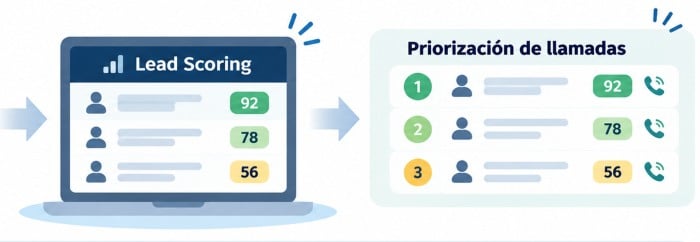
This prioritization can be built using a system of lead scoring, assigning greater relevance to records that show signs of interest or characteristics associated with better historical results.
Design a retry strategy based on results
An unanswered call doesn't necessarily mean the contact isn't interested; they might be busy, working, or simply not recognize the number. The goal of follow-up is to offer new contact opportunities without turning the campaign into a series of pushy calls.
To organize it correctly, the CRM should distinguish between situations where each state will require a specific action.
- “doesn’t answer”
- “"busy"”
- “incorrect phone number”
- “request a callback”
- “does not wish to receive further communications”
If the person requests that we call them back another day, that preference should guide the next contact. If the number is incorrect, repeating the call is pointless. And if the recipient exercises their right to opt out, they should be excluded from future communications.
Prepare the contact before calling when appropriate
In certain campaigns, especially when the user has shown prior interest, it can be useful combine the telephone with other communication channels.
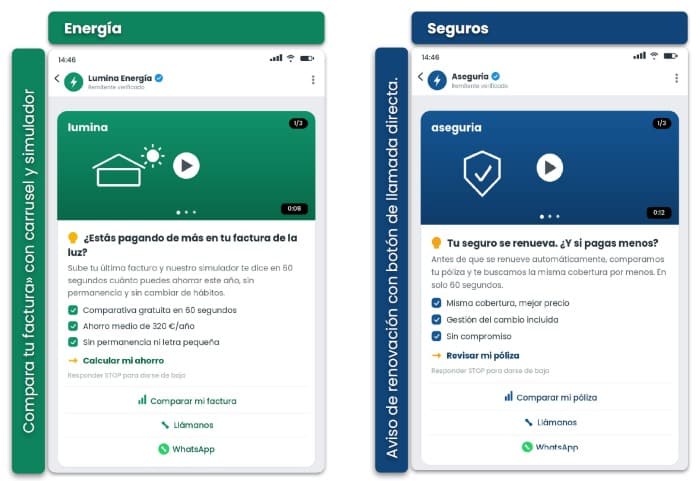
A RCS message, For example, it can allow a person to view information about a proposal or explicitly request a call. If that interaction is recorded correctly, the sales team will be able to understand the context before making contact.
The conversation will be different when the agent knows what information the recipient has requested and can clearly explain the reason for the call.
You can learn more about this strategy in our article on How to combine RCS and telemarketing to improve lead conversion.
What indicators to analyze to detect where calls are being lost
Measuring only the overall contact rate can mask significant problems. Therefore, to identify what is failing It is advisable to separate the results according to the cause. of each unsuccessful call.
Observed result | What should be investigated? |
Many incorrect or inactive phone numbers | Quality, age and validation of the database |
Many unanswered calls | Time slots, issuing number, and retry strategy |
They respond, but it's not the right person to talk to. | Segmentation and quality of contact data |
High percentage of connection blocks or incidents | Telephony configuration, numbering, and issuer reputation |
Good contactability, but few opportunities | Qualification, business proposal and conversation management |
This analysis helps avoid wrong decisions It's also useful to analyze contactability by data provider, segment, lead age, and number of attempts. Comparing these groups helps identify where it's worthwhile to concentrate resources.
Improve the database or modify the campaign: where to start?
The priority depends on the problem detected:
- When a high proportion of calls end up with non-existent numbers, duplicates, or incorrect interlocutors, it is advisable to start with the quality of the data.
- If the records are valid, but most are not responding, it will be more helpful to investigate the issuing number, times, and retries.
- If conversations are being arranged, but few opportunities are being generated, the problem is probably no longer one of contactability, but of qualification or conversion.
In Lead to Win We work with solutions telemarketing databases, call normalization, enrichment, and identification that allow addressing different parts of the commercial acquisition process.
The most profitable decision isn't always to expand your database or increase call volume. Before investing more resources, it's wise to identify which leads are worth cultivating, what's preventing you from reaching them, and what changes can truly improve your sales results.